BRIGHTNESS
Read the lumens
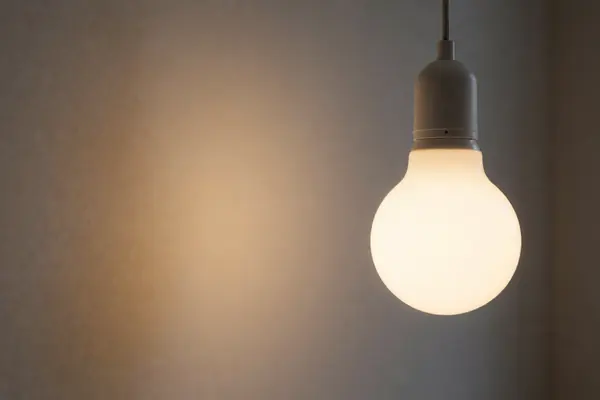
The Energy Saving Trust says watts measure power, not brightness. An LED of about 800 lumens roughly matches an old 60 watt incandescent bulb.
Find your lumens doodletronic
Start
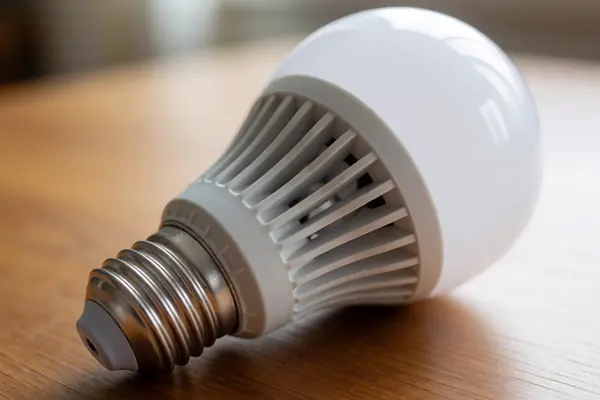
INSIDE AN LED BULB
Watts measure power used. Lumens measure light.
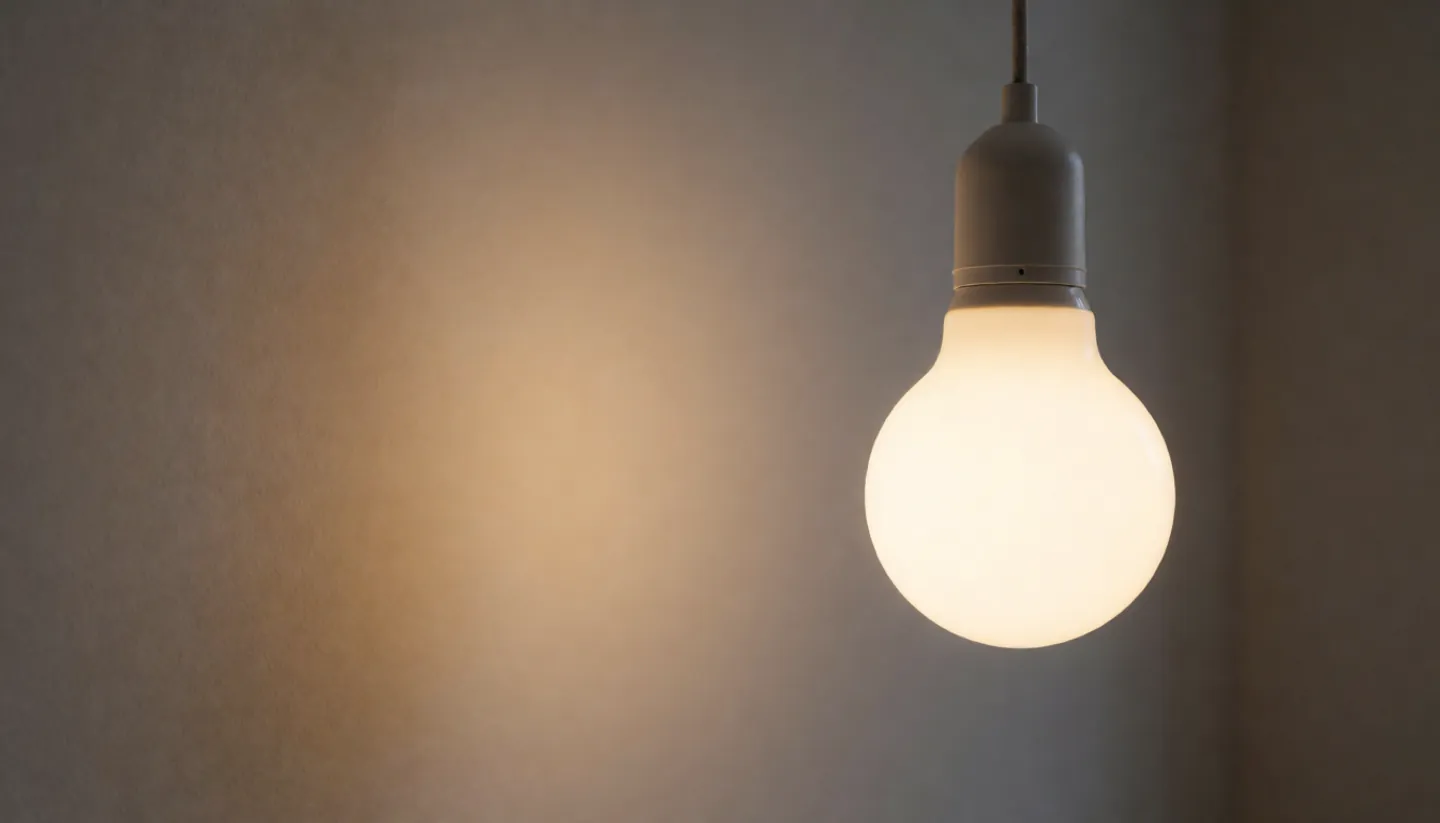
With old bulbs, watts were a handy guide to brightness. LEDs give the same light for far fewer watts, so the Energy Saving Trust says to look at lumens instead, then at the colour and the label.
800 lm≈ an old 60 W bulb
Find your lumensKeep in mind
THE SHORT ANSWER
LEDs are now almost the only bulbs in UK shops.
The box tells you most of what matters.
BRIGHTNESS
The Energy Saving Trust says watts measure power, not brightness. An LED of about 800 lumens roughly matches an old 60 watt incandescent bulb.
Find your lumensLIFESPAN
ENERGY STAR says LEDs rarely burn out. Their rated life is when light output is predicted to have dropped by 30 percent, and heat speeds that fade.
Why heat mattersCOLOUR
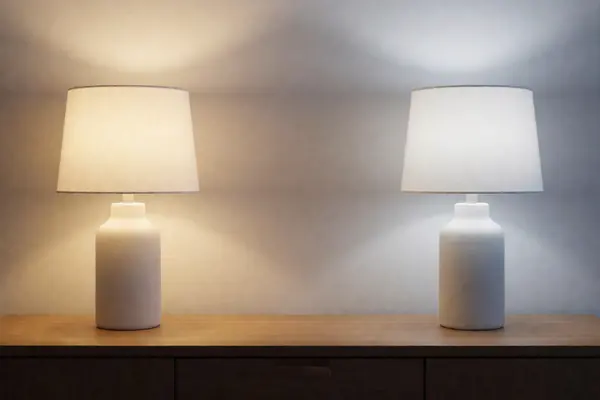
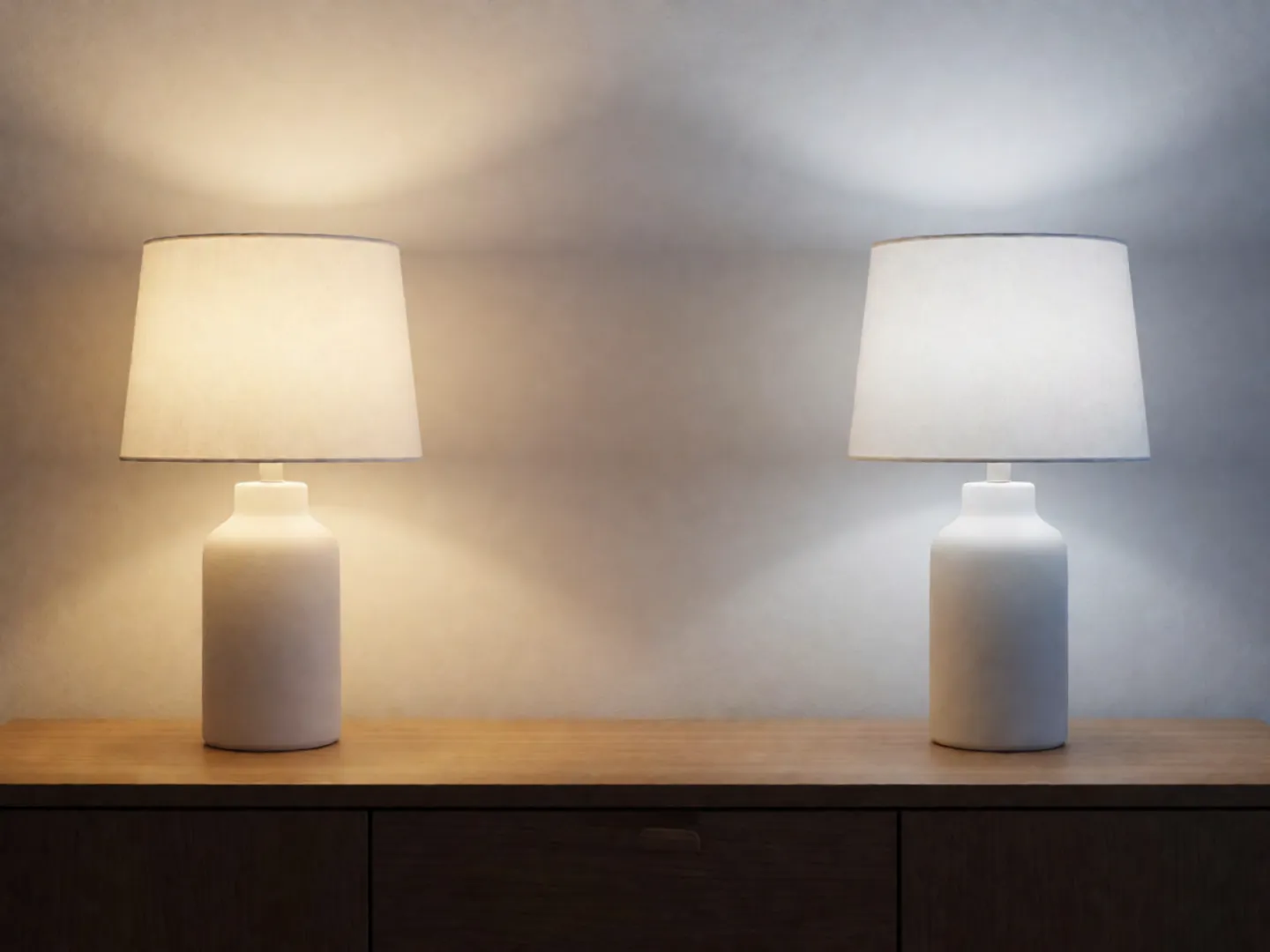
The kelvin number gives the colour. 2,700 to 3,000K is warm white for most rooms; 4,000 to 4,500K is cool white, which can feel harsh.
Choose a bulbA QUICK BRIGHTNESS CHECK
Pick the old bulb's wattage to see the approximate LED lumens that match it. The bar shows how bright that is.
Approximate equivalents from the Energy Saving Trust's lighting guide.
TWO NUMBERS WORTH KNOWING
One figure for energy use,
one for how an LED's life is measured.
up to 80%
Electricity saved compared with halogen
The UK government said in 2021 that LEDs give the same light as halogen bulbs using up to 80 percent less power and last 5 times longer.
ENERGY USE · GOV.UK / EST
30%
Light loss that marks an LED's rated life
LED lifetime is based on a prediction of when light output falls by 30 percent, because LEDs dim slowly rather than burning out.
RATED LIFE · ENERGY STAR
The Energy Saving Trust says only about 5 percent of the electricity an incandescent bulb uses becomes visible light.
FOUR CHECKS ON THE BOX
These come from the Energy Saving Trust's advice on choosing energy saving bulbs.
Step 1
Use lumens, not watts, to judge brightness. About 800 lumens replaces an old 60 watt bulb.
Step 2
About 2,700K is very warm white for living rooms and bedrooms; 2,700 to 3,000K suits most rooms; 4,000 to 4,500K is cool white, perhaps for bathrooms or kitchens.
Step 3
The colour rendering index shows how true colours look under the bulb. 80 or more is good for most household tasks.
Step 4
Not every LED works with a dimmer, and an old dimmer may need replacing with an LED-compatible one fitted by an electrician.
WHY HEAT MATTERS
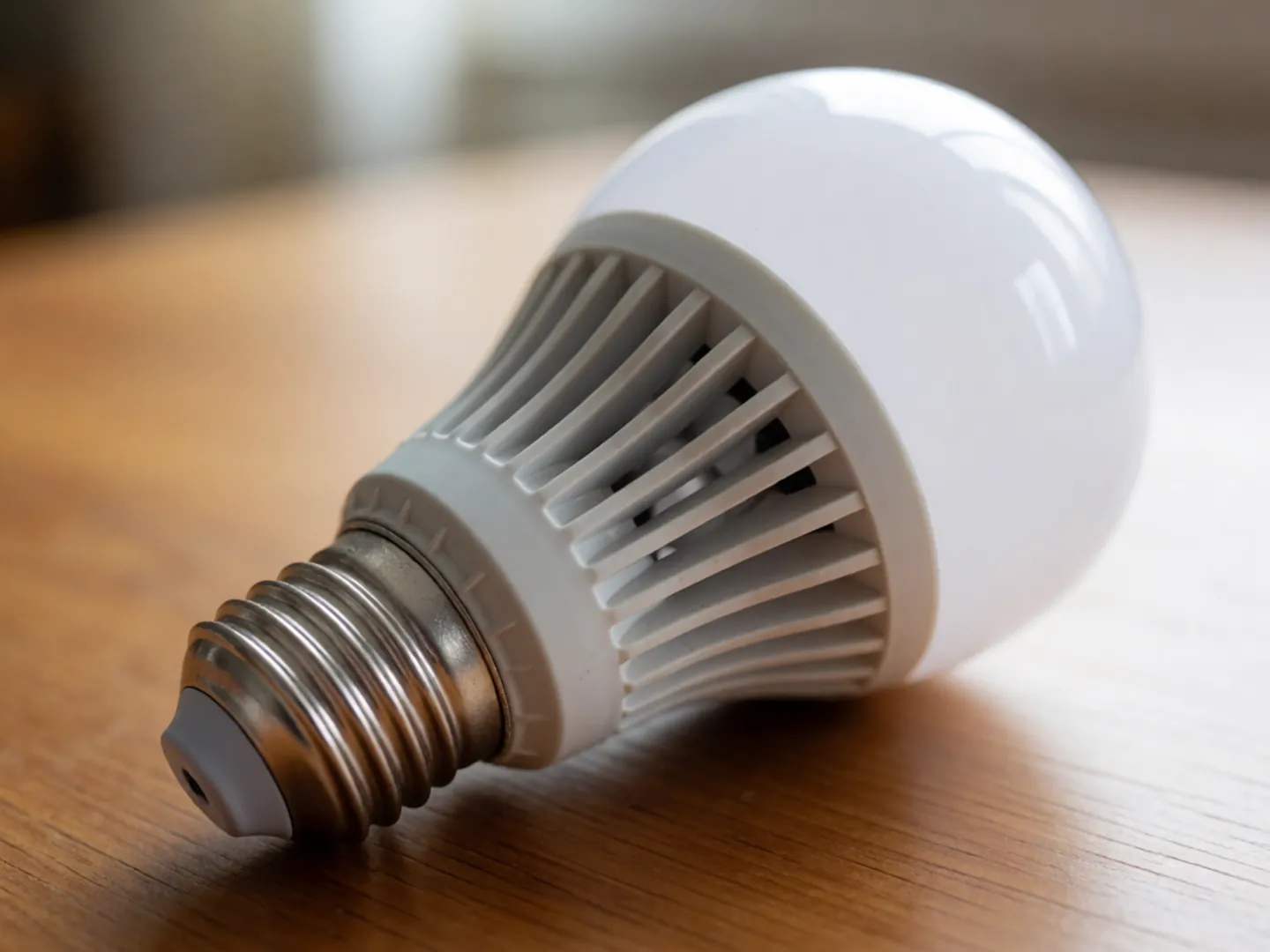
ENERGY STAR explains that a current passes through a microchip to light the tiny LEDs, and the heat they make is drawn away by a heat sink. The hotter an LED runs, the faster its light fades and the shorter its useful life.
LEDs are not naturally white. The US Department of Energy says white light comes from a phosphor coating that converts coloured light, from mixing red, green and blue LEDs, or a mix of both. Since 2021, UK bulb boxes carry a rescaled A to G energy label, with very few bulbs rated A.
Questions
The Energy Saving Trust puts the LED equivalent of a 60 watt incandescent bulb at about 800 lumens, and a 100 watt bulb at about 1,520 lumens.
It is the colour temperature. The Energy Saving Trust says about 2,700K is very warm white, similar to old incandescent bulbs, while 4,000 to 4,500K is cool white.
ENERGY STAR says LEDs usually dim slowly instead. Their rated lifetime is a prediction of when light output will have dropped by 30 percent, and running hot shortens it.
In 2021 the UK government introduced rescaled A to G labels on bulb boxes, removing A+, A++ and A+++. The new scale raised the bar for each class, so very few bulbs are now rated A.
The government ended the sale of most halogen bulbs for general household use from 1 September 2021, with fluorescent tubes following from September 2023. Some special types remain.
Destination
ABOUT THIS NAME
doodletronic.com is part of the DoodleSale portfolio. It isn't in an auction right now, but you can ask about leasing it.